

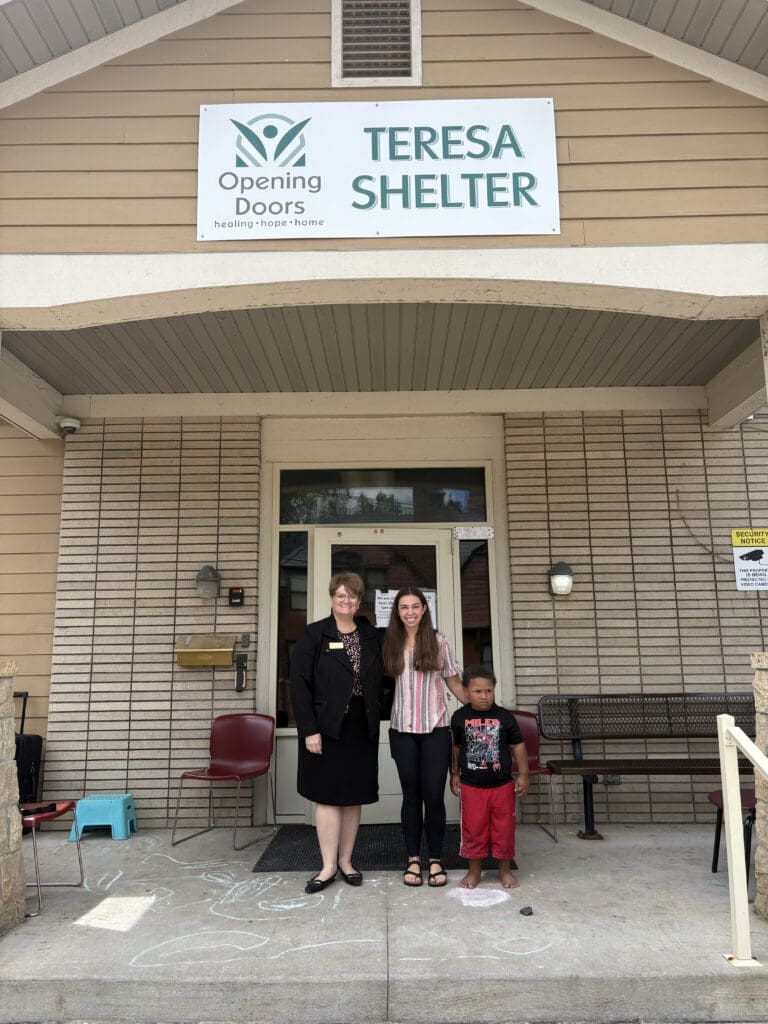
This week, Opening Doors had the privilege of meeting with Kim Reem to discuss how legislative advocacy can strengthen support for women and children experiencing homelessness in Dubuque. Our conversation centered on barriers that shelters like ours face daily, and how state and federal policy changes can make a tangible difference in the lives of families we serve.
We also shared information about the recently introduced Women’s and Family Protection Act (WFPA), which aims to bolster shelter funding and services nationwide. You can read more about it here.


Legislative Priorities for Opening Doors
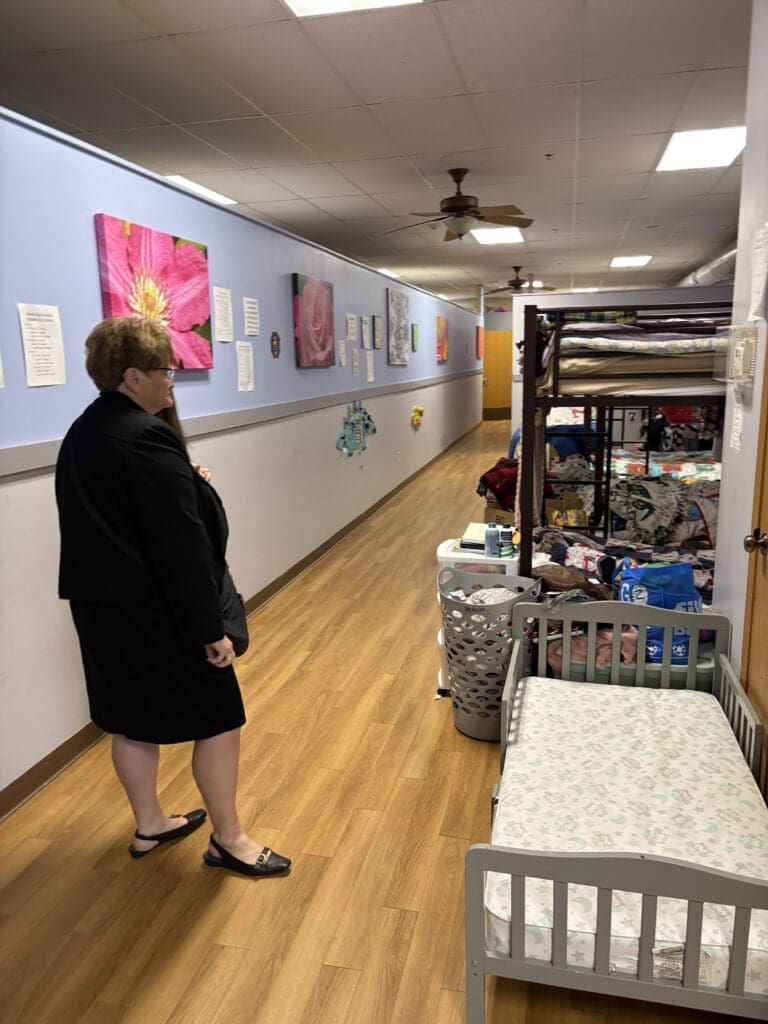
- Funding for Space
• Advocate for increased state and federal appropriations to support capital expansion of shelters and transitional housing facilities.
• Push for dedicated funding streams (not just competitive grants) to expand trauma-informed spaces for women and children experiencing homelessness.
• Support legislation that provides infrastructure grants to nonprofits addressing homelessness. - Housing Vouchers
• Expand availability of Housing Choice Vouchers (Section 8) and shorten waiting lists, especially for women with children.
• Remove restrictions for women with poor credit, criminal history, or past evictions.
• Advocate for portable vouchers that allow families to move across counties or states without losing eligibility. - HUD Barriers
• Opening Doors has historically faced challenges accessing Emergency Solutions Grant (ESG) and Shelter Assistance Fund dollars due to HUD’s strict compliance pillars. Specifically:
• Substance Use Flexibility: HUD requires acceptance regardless of sobriety status, while Opening Doors requires a baseline drug test and immediate referral to ASAC for recovery support.
Voluntary Services: HUD mandates all service plans be voluntary, while Opening Doors uses structured case plans to support accountability and growth.
This creates barriers to ESG funding, despite our proven outcomes in helping women and children achieve stability.
Where support is needed:
• Policy Adjustments: Reevaluating intake and service plan policies for alignment with HUD’s requirements.
• Resources: Securing alternative funding to support women entering without sobriety.
• Advocacy: Partnering with HUD and state agencies for clearer guidance that balances compliance with effective programming. - Transportation
• Expand public transit funding to ensure affordable, reliable access to shelters, schools, healthcare, and employment.
• Advocate for transportation vouchers or passes for low-income families and shelter residents.
• Support grants for nonprofits to provide direct transportation services (vans, ride-share partnerships). - Childcare
• Increase childcare subsidies for low-income and homeless families, keeping pace with real market costs.
• Push for flexible childcare hours (nights/weekends) to support women working non-traditional schedules.
• Support grants for shelters to provide on-site childcare as part of housing and recovery programs.
Moving Forward Together
These conversations are vital as we work to ensure healing, hope, and home for the 700+ women and children we serve each year. Legislative change takes time, but through partnerships and advocacy, we can make sure every family has a safe place to rebuild their lives.
If you have questions or would like to collaborate on advocacy efforts, please don’t hesitate to reach out.